Gas detection · Portable and wireless

Portable and wireless gas detection


Instruments that protect the individual: personal single-gas and multi-gas detectors, confined space monitoring, transportable area monitors and the wireless infrastructure that reports them back to you.

How to choose

Which instrument, for which task


Portable detection covers three different jobs, and mixing them up is the most common specification error we see. A permanently worn personal detector answers whether the air around the worker is safe. A pre-entry instrument with a pump answers whether it is safe to go in at all. An area monitor answers what is happening at the work site as a whole.

The second decision is commercial rather than technical: a maintenance-free instrument with a fixed service life, or a serviceable instrument with replaceable sensors and batteries. Fleet size, the presence of a maintenance workshop and the expected service life decide which is cheaper over four years — and we will do that calculation with you rather than quote a unit price into the void.

Honeywell BW™ portables

Product pages


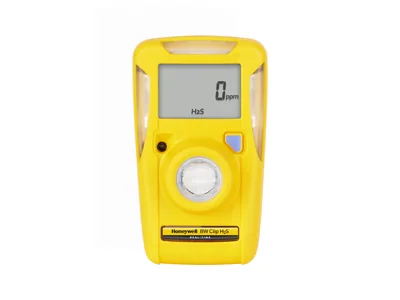
Honeywell BW™ Clip

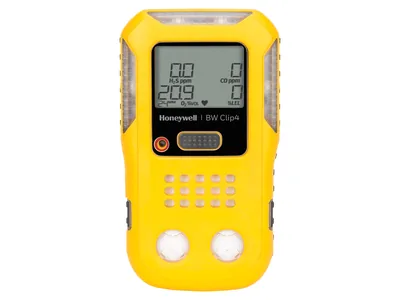
The BW™ Clip series is a single-gas detector for workforces that need dependable personal protection without a maintenance organisation behind it. The instrument is switched on once and then runs continuously for its service life.

Honeywell BW™ Clip in detail
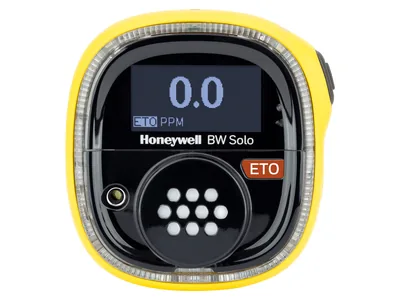
Honeywell BW™ Solo

The BW™ Solo is the serviceable counterpart to the fixed-life single-gas detectors: sensors and batteries are replaceable, and Bluetooth Low Energy connectivity gives real-time visibility of the status and safety of workers in hazardous areas.

Honeywell BW™ Solo in detail
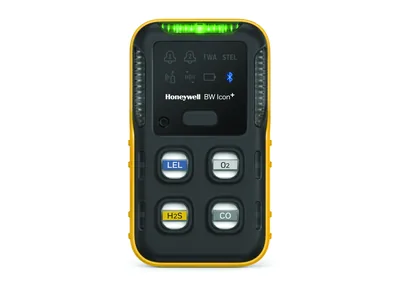
Honeywell BW™ Flex

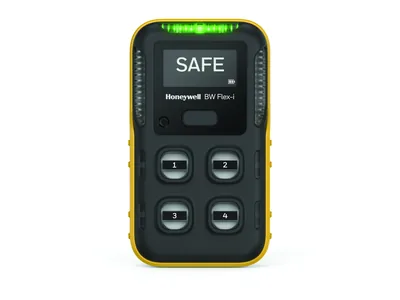
The BW™ Flex is the serviceable portable instrument for gas lists that do not fit the standard four-gas combination. Honeywell offers a choice of more than 15 sensors, of which up to four can be active simultaneously.

Honeywell BW™ Flex in detail
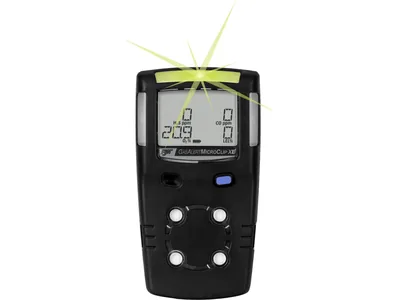
Honeywell BW™ Ultra

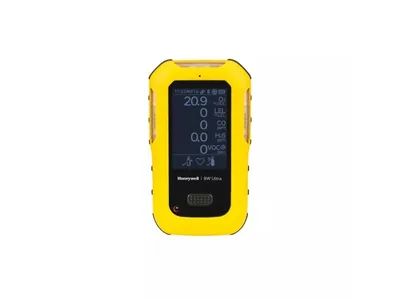
The BW™ Ultra is a five-gas detector designed specifically for sampling and monitoring confined spaces, before and after entry. It is the instrument for permit-to-work situations rather than for general personal protection.

Honeywell BW™ Ultra in detail
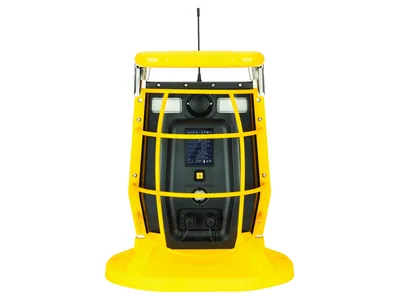
Honeywell BW™ RigRat

The BW™ RigRat is a transportable multi-gas area monitor for extreme industrial environments — the instrument that watches the work site rather than the individual, during a shutdown, a hot work permit or an incident.

Honeywell BW™ RigRat in detail
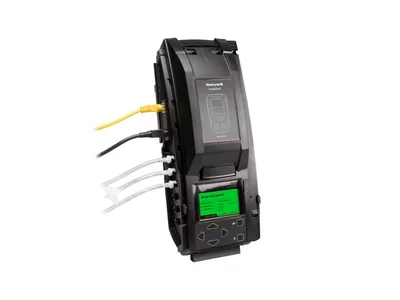
Honeywell Flex 5 Series

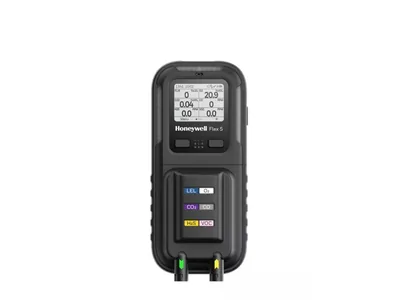
The Flex 5 Series is Honeywell's modular portable platform: one base unit that works as a pumped instrument for confined space sampling and as a wearable for personal protection, with swappable cartridges instead of separate devices.

Honeywell Flex 5 Series in detail
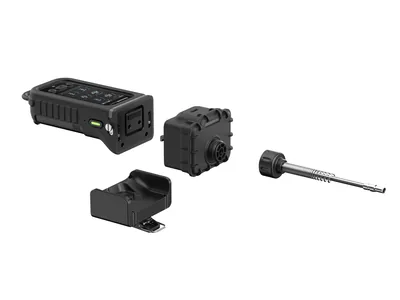
Honeywell ModRAE™

ModRAE is Honeywell's modular platform for VOC screening and compound-specific detection. Interchangeable smart cartridges carry the sensing, so the detection capability can be changed without replacing the instrument.

Honeywell ModRAE™ in detail


Honeywell RAE

Multi-gas monitors, PID instruments and area monitoring


QRAE 3

Rugged one- to four-sensor gas monitor, pumped or diffusion, for continuous exposure monitoring of oxygen, combustibles and toxic gases including hydrogen sulphide, carbon monoxide, sulphur dioxide and hydrogen cyanide.

MicroRAE and MultiRAE

MicroRAE is a wireless multi-gas diffusion monitor measuring up to four gases simultaneously. MultiRAE is the versatile, customisable platform with real-time access to readings and alarm status from any location.

ToxiRAE Pro family

Wireless access to real-time readings and alarm status from any location, for better visibility and faster response.

MiniRAE Lite+ and MiniRAE 3000+

Handheld photoionisation detectors for volatile organic compounds: 0 to 5,000 ppm on the Lite+, and full-range measurement from 0 to 15,000 ppm with up to six months of datalogging on the 3000+.

ppbRAE 3000+ and UltraRAE 3000+

The ppbRAE 3000+ is a VOC monitor and datalogger with a 9.8 eV or 10.6 eV UV discharge lamp. The UltraRAE 3000+ is compound-specific: benzene from 50 ppb to 200 ppm, other VOCs from 0.05 to 10,000 ppm.

AreaRAE Pro, AreaRAE Plus and AutoRAE 2

Transportable multi-threat area monitors detecting toxic and combustible gases, VOCs and meteorological factors, with radiation detection on the Pro. AutoRAE 2 is the automatic test and calibration system for the range.

The RAE range is available through us with the same engineering, calibration and consumable service as the BW™ instruments. Tell us the gases and the working situation and we will name the instrument.

Wireless infrastructure

Getting the readings out of the plant


MeshGuard and Mesh Router

MeshGuard establishes a self-forming, self-healing wireless network and delivers sensor and alarm data to the controller of your choice. Up to three Mesh Routers extend the range between monitors and the EchoView Host.

EchoView Host and EchoView

EchoView Host builds a self-contained wireless network with up to eight portable monitors on one screen; EchoView displays the readings of up to sixteen MeshGuard detectors.

RAELink 3 and RAELink 3 Mesh

Portable wireless routers with GPS that link portable gas and radiation monitors into the network and give remote access to readings, alarm status and location.

RAEPoint and Central Hub

RAEPoint is a fixed-head, DC-powered, explosion-proof wireless router or remote relay. The Central Hub uses LoRa radio, supports up to 64 LoRa-enabled detectors and reports to Safety Suite over Ethernet, Wi-Fi or cellular.

Honeywell Safety Suite ties the fleet together: device management, real-time readings, worker location, incident playback, geofence alerts and automated maintenance tasks such as scheduled reports, firmware updates and data downloads. It can be operated in the cloud or on premises.

FAQ

Questions about portable detection


Which portable detector suits a confined space entry?

For entry work the instrument has to draw a sample from the space before anyone goes in. The Honeywell BW™ Ultra is built for exactly that case as a five-gas detector for sampling and monitoring confined spaces before and after entry; the GasAlertMax XT II covers up to four gases with a built-in sampling pump. The choice depends on how many gases have to be covered and whether the same instrument is also worn during the work.

Maintenance-free or serviceable — which type of detector should we buy?

Maintenance-free instruments such as the BW™ Clip series or BW™ Clip4 run for a fixed service life with no sensor or battery changes, which suits large fleets, contractors and visitors where no maintenance organisation exists behind the device. Serviceable instruments such as BW™ Solo, BW™ Icon+ or BW™ Flex are the better economic choice where there is a workshop, a calibration routine and instruments that stay in service for years.

How often does a portable gas detector have to be bump tested?

The interval follows the manufacturer’s instructions for the specific instrument and your own risk assessment; where the detector protects against an acute hazard, many operators bump test before each shift in which it is used and calibrate at the interval given in the manual. The practical answer is to automate it: IntelliDox™ for the BW™ range and AutoRAE 2 for the RAE range perform the test and record the result.

Can portable detectors be monitored remotely?

Yes. Honeywell Safety Suite collects data from connected instruments and docking stations and provides fleet management, real-time readings, worker location, geofence alerts and event notification. Area monitors such as BW™ RigRat and the AreaRAE family feed into the same system, and wireless infrastructure carries the data where there is no fixed network.

Enquiry

Send us your specification


Send us your requests with technical specifications to receive a prompt reply from our industry specialists. For gas detection, add the gases and the zone classification.

Or by email: purchasing@vertex-group.de